





2023 Chevy Bolt EV vs EUV
Comparing Two Great Affordable Electric Vehicles
The Chevy Bolt EV and Bolt EUV are siblings in more than just name. Both share the Bolt moniker, a reasonable starting MSRP below $30k, the same electric powertrain, and much more. The EV model came first while the EUV is the more recent SUV version of the original. This article will help illustrate the differences and point you towards the Bolt model that is best for you.
Why Buy a Bolt
The Bolt lineup has been highly popular with buyers looking for an affordable electric vehicle, no doubt due to it being one of the least expensive electric vehicles available in the US. Their only competition in the sub-$30k segment being the Nissan Leaf, which is priced slightly higher. Sadly, GM has announced plans to discontinue producing both Bolts in late 2023 to focus more on its other electric offerings.
Same but Different
The differences between the Chevy Bolt EV and the Chevy Bolt EUV are subtle but important. Both vehicles offer all-electric powertrains, are packed full of modern tech and safety features, and are sure to save buyers a ton on fuel costs over the life of the vehicle. The primary differences between the two models derive from their different body types with the Bolt EV being a compact hatchback and the EUV a slightly larger crossover.
Performance and Range
Performance-wise, both the Bolt EV and the Bolt EUV utilize the same 65 kWh battery pack and electric motor system. This combo delivers 200 horsepower, 266 pound-feet of torque, and approximately 250 miles of max range on a full charge. The instant torque of electric engines ensures a quick and responsive acceleration, making them efficient in city driving and highway merging.
The Bolt EV offers more power and agility due to its slightly lighter weight of 3,589 pounds compared to the EUV's 3,679 pounds. The weight difference also translates into a minor difference in 0-60 acceleration times with the EV clocking in at a peppy 6.5 seconds and the EUV at a still respectable 7.0 seconds.
Largely due to the slight weight difference, the EV has a longer range than the EUV. The Bolt EV has an EPA-estimated range of 259 miles, while the Bolt EUV has an EPA-estimated range of 247 miles. Both models support Level 1, 2, and 3 charging connections and can gain approximately four miles of range per hour of charging at 120 volts and can fully charge in about seven and a half hours at 240 volts. However, when utilizing DC fast charging, the Bolt EV offers slightly better performance, gaining 100 miles of range in just 30 minutes, while the EUV achieves 95 percent of that figure.

Overall Size and Storage Space
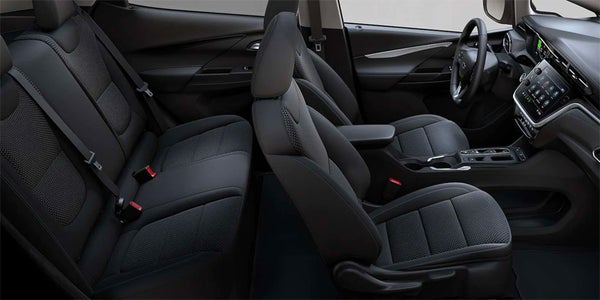
The Bolt EUV, as a crossover, offers more interior room than its sibling. It has a longer wheelbase of 105.3 inches compared to the Bolt EV's 102.4 inches, resulting in an additional 3.1 inches of legroom for rear-seat occupants. This increased space contributes to a total passenger volume of 96.5 cubic feet, surpassing the Bolt EV's 93.9 cubic feet. Additionally, the Bolt EUV offers the option of a panoramic roof, enhancing the cabin's sense of spaciousness. However, opting for the panoramic roof reduces front-seat headroom slightly.
Surprisingly, the Bolt EV offers more cargo space than the Bolt EUV despite its smaller size. The Bolt EV provides 16.6 cubic feet of space behind the second row, which can expand to 57 cubic feet with the rear seats folded down. In comparison, the Bolt EUV offers 16.3 cubic feet of space behind the second row and 56.9 cubic feet with the rear seats folded. The Bolt EUV's sloping roofline accounts for the slight reduction in storage capacity.
Interior and Infotainment
Looking at the interior, the Bolt EV and the Bolt EUV share many similarities. Both models feature a 10.2-inch touch screen Chevy Infotainment 3 Plus system, wireless Android Auto and Apple CarPlay compatibility, Wi-Fi connectivity, a six-speaker audio system with SiriusXM, heated front seats, and an 8-inch driver information center. However, the Bolt EUV offers some additional interior options, such as standard ambient lighting and more upholstery choices, including perforated leather seating. It also offers packages to enhance the interior, including a panoramic sunroof, a Bose premium seven-speaker audio system, and ventilated seating.
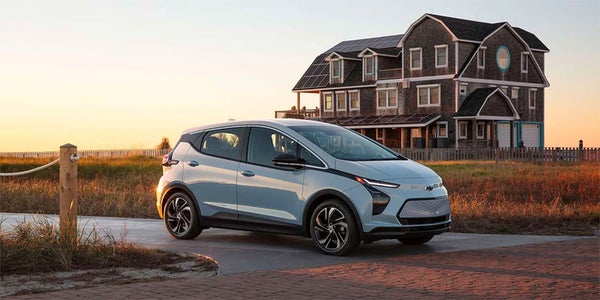
In terms of exterior design, the Bolt EV and the Bolt EUV have distinct styling elements. The Bolt EV has a closed-off front end and a signature black accent, while the Bolt EUV features a slightly open front end and a more upright rear hatch and nose. The taillights and rear bumpers also differ between the two models. The Bolt EUV's design is more reminiscent of a crossover, while the Bolt EV embraces its hatchback identity.
Hands Free Driving in the EUV
One notable advantage of the Bolt EUV is the inclusion of GM's Super Cruise, a semi-autonomous driving technology. Super Cruise enables hands-free driving on more than 400,000 miles of compatible roads in the U.S. and Canada. This makes the EUV a compelling option for those seeking an affordable electric vehicle with advanced autonomous features.
Which is Best for You?
Considering the above factors, choosing between the Bolt EV and the Bolt EUV ultimately depends on individual preferences and priorities. Both models deliver similar performance and interior comfort with only a few differences. The Bolt EV excels in terms of performance, agility, and a more compact size, making it easier to maneuver in urban environments. On the other hand, the Bolt EUV offers a more spacious interior, and the inclusion of GM's Super Cruise technology. Both models provide comparable ranges and charging capabilities, ensuring they are suitable options for those seeking an affordable electric vehicle.
For the most up-to-date and accurate information, it is advisable to consult the official Chevrolet website or contact our Clearwater sales staff.
Frequently Asked Questions
What are the ranges for the 2023 Chevrolet Bolt EV and Bolt EUV?
The Bolt EV wins with its rated range of up to 259 miles on a full charge, while the EUV is rated for up to 247 miles. The difference is largely due to the heavier and larger frame of the EUV.
What are the biggest differences between the Chevrolet Bolt EV and EUV?
The Chevy Bolt EV is a hatchback sedan and the Chevy Bolt EUV is a crossover SUV. The EV has a slightly increased driving range and offers less interior space. The EUV has more interior space and also comes with the hands-free Super Cruise as an available option.
Which Bolt model has more passenger room? Which has more storage room?
The Bolt EUV comes with around 16 cubic feet of cargo space behind the rear seats and 97 cubic feet of passenger volume. In contrast, the Bolt EV has 93.9 cubic feet of passenger space with 16.6 cubic feet of cargo space behind said rear seats. Despite a smaller frame and less passenger room, the EV has a bit more cargo space.
Please note that these specs were released by GM in 2021 and minor differences may exist between what is listed above and the current 2023 versions of each model.
AutoNation Chevrolet South Clearwater
15005 US Highway 19 North, Clearwater, FL 33764
Contact UsHours
| Monday | 9:00AM - 8:00PM |
| Tuesday | 9:00AM - 8:00PM |
| Wednesday | 9:00AM - 8:00PM |
| Thursday | 9:00AM - 8:00PM |
| Friday | 9:00AM - 8:00PM |
| Saturday | 9:00AM - 7:00PM |
| Sunday | 11:00AM - 5:00PM |
| Monday | 7:00AM - 7:00PM |
| Tuesday | 7:00AM - 7:00PM |
| Wednesday | 7:00AM - 7:00PM |
| Thursday | 7:00AM - 7:00PM |
| Friday | 7:00AM - 7:00PM |
| Saturday | 7:00AM - 5:00PM |
| Sunday | Closed |
| Monday | 8:00AM - 6:00PM |
| Tuesday | 8:00AM - 6:00PM |
| Wednesday | 8:00AM - 6:00PM |
| Thursday | 8:00AM - 6:00PM |
| Friday | 8:00AM - 6:00PM |
| Saturday | 8:00AM - 5:00PM |
| Sunday | Closed |